Car Park Ventilation Systems
Simple car park ventilation system. A simple car park ventilation system is typically limited to a propeller fan. These systems are used for small residential garages. Most of these garages have openings to the outside, allowing the propeller fan to easily ventilate the small parking space. • Ducted car park ventilation system. Some medium-sized car parks lack adequate openings to open air and therefore utilize ductwork for air intake and exhaust. Due to their small-to-medium size, these car parks do not require heavy-duty ventilation systems for air discharge, and the ventilation system can be implemented using standard, simple fans.
Advantages of using a car park ventilation system • High quality of breathable air. All car park ventilation systems are used to introduce fresh air into the space. Fumes produced by vehicles are hazardous to health, and it is essential to exhaust these fumes as quickly as possible. Various car park ventilation systems achieve this by discharging fumes and injecting fresh air into the facility. • Fire emergency assistance via car park ventilation systems. The accumulation of vehicle exhaust fumes inside an enclosed parking space may lead to explosions. Furthermore, car parks are susceptible to accelerated fire spread due to other incidents given their layout. Under these conditions, the ventilation system must be capable of preventing fire progression while creating a safe evacuation route for occupants and entry access for firefighting crews. • Use of sensitive and precise sensors. Most car park ventilation systems are equipped with various smoke and fire sensors to activate an emergency response mode for the car park fans in the shortest possible time.
In recent years, car park fans have become one of the fundamental pillars of building ventilation systems. These fans must possess high power and be capable of extracting pollutants generated by vehicles. Below, we discuss the types of car park fans. A car park fan can effectively impact the safety of the building and the occupants present. Car parks are accumulation sites for polluted air produced by cars, and this contamination can cause building explosions or respiratory distress for residents. Car park fans in various models can extract polluted air from the environment and supply fresh air into the parking area. Below, we explain the types of car park fans and then review tips regarding purchasing, installing, and maintaining these fans.
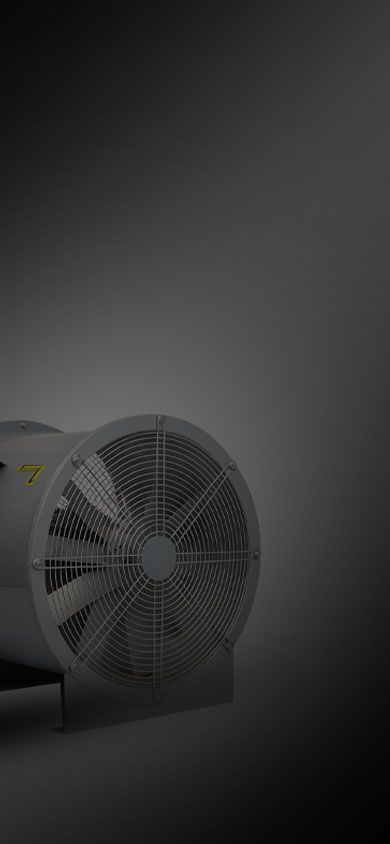
Axial car park fan. Axial fans are the most basic fan model available on the market. These propeller fans cannot move large volumes of air and are suitable for small car parks with exterior wall openings. • Centrifugal car park fan. Centrifugal fans are typically used in air ducts. These fans can move larger volumes of air, but full coverage of large car park interiors cannot be achieved using centrifugal car park fans alone.
Classification of Car Parks
According to Chapter 3 of the National Building Regulations, all enclosed car parks, at any level, must have adequate ventilation for the extraction of smoke and other gaseous combustion products resulting from a fire.
Types of Car Parks
1- Open Car Park
An open car park is defined as a car park where at least 20 percent of the total wall area or 40 percent of the wall length consists of openings. (Natural ventilation)
2- Semi-Open Car Park
A semi-open car park is defined as a car park where at least 10 percent of the total wall area or 20 percent of the wall length consists of openings. (Mechanical ventilation without fresh air) These car parks do not require a fresh air system.
3- Enclosed Car Park
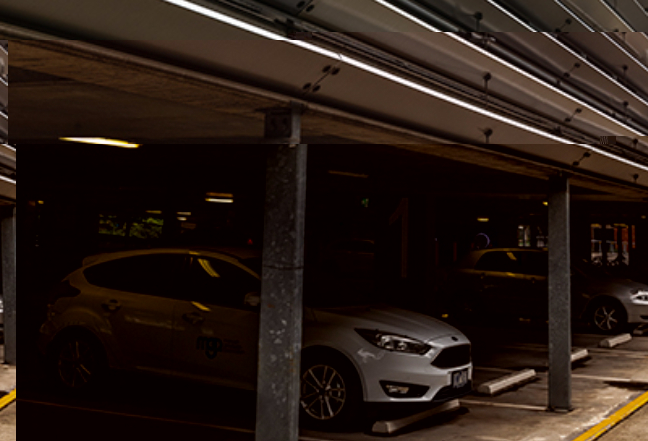
An enclosed car park is a car park that has no openings to the open environment. (Mechanical ventilation)
Based on Area
• Under 300 square meters
• 300 to 500 square meters
• Over 500 square meters up to 2000 square meters
• Over 2000 square meters
Based on Top Floor Level
Below 9 meters
• 9 to 18 meters
• 18 meters and above
Types of Car Park Ventilation Systems
Car park ventilation systems consist of two types: natural and mechanical ventilation.
Open Car Park (Natural ventilation)
Enclosed Car Park
1- Height less than 9 meters
A - Under 300 meters and level less than 3 meters (Natural ventilation) In these car parks, designing a smoke management system is not required
B - Up to 500 square meters (Mechanical ventilation without fresh air)
C - Over 500 square meters (Full mechanical ventilation)
D - Car parks over 2000 square meters (Mechanical ventilation with zoning)
2- Height over 9 meters (Full mechanical ventilation)
3- Over 18 meters (Mechanical ventilation with zoning)
Equipment Required for Types of Car Parks
1- Mechanical Ventilation (Smoke management systems without fresh air):
The equipment required in these car parks includes two exhaust fans. If axial fans (in-line exhaust fans) are used, according to performance criteria, the fans used in the exhaust section must comply with the F-300 standard. Otherwise, centrifugal fans (utility exhaust fans) can be used.
2- Full Mechanical Ventilation:
The equipment required for these car parks includes two fresh air fans and two F-300 certified axial exhaust fans per zone, and if necessary, F-300 jet fans can be used to reduce horizontal floor ducting.
3- Mechanical Ventilation with Zoning:
In these car parks, smoke curtains must be used to isolate fire zones. For each zone, an independent smoke management system including an F-300 exhaust fan, a fresh air fan, and, if needed, F-300 jet fans must be designated separately. The smoke management scenario in all cases can be executed via the smoke management electrical control panel.
related product
related projects