Car Park Jet Fan
Proper ventilation is essential in large spaces such as parking garages—where airborne pollutants are generated—to effectively reduce the concentration of hazardous particles in the air. In such environments, parking jet fans are used to control airflow and prevent the spread of contaminants. Due to their specially designed blade profiles and unique housing shapes, jet fans are capable of achieving high rotational speeds and moving large volumes of air at elevated pressures. This makes them the ideal choice when high airflow capacity is required within limited spaces like parking garages.
One of the most common solutions for this purpose is the parking jet fan, which functions as an integral part of the parking ventilation system. By delivering proper airflow distribution, it ensures a safe and healthy environment.
Jet fans are manufactured in various types to suit different applications. For example, tunnel jet fans are typically used in highway and tunnel projects to move polluted air over long distances. On the other hand, axial jet fans are a suitable option for spaces requiring a direct and powerful airflow. If you wish to gain comprehensive and practical information about the operation, advantages, key factors affecting parking ventilation systems, and ultimately a detailed review of parking jet fan pricing, we recommend you continue reading this article.
According to the standards of the Fire Department Organization, the design of HVAC systems for parking facilities must comply with the guidelines set forth in the "Regulations for Ventilation, Smoke Exhaust, and Smoke Control Systems." Based on these regulations, all parking jet fans used must be rated Class F300, meaning they are capable of withstanding temperatures of 300°C for at least one hour.
Parking HVAC System Using Jet Fans
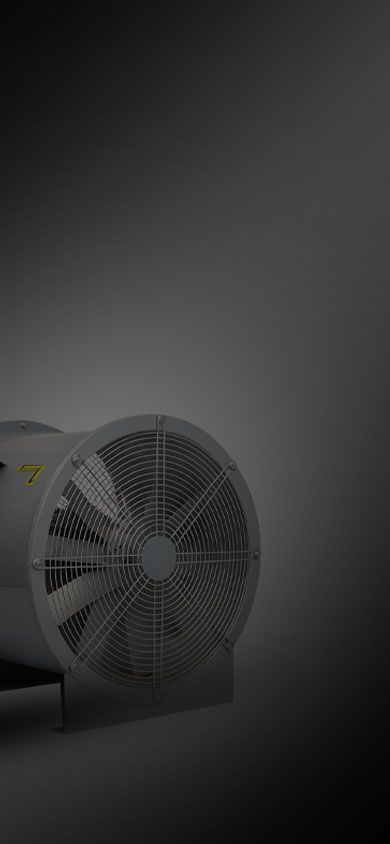
Parking jet fans consist of three main components: the electric motor, the impeller, and the housing.
Electric Motor:
The motor is the driving component of the jet fan system and is responsible for rotating the impeller. Its ability to withstand continuous loads, heat, and specific environmental conditions is of critical importance.
Impeller:
The impeller in jet fans is responsible for generating the required airflow. The appropriate material and profile design of the impeller blades play a significant role in improving overall efficiency.
One of the most crucial design considerations for an F300-rated jet fan impeller is that it must continue operating at 300°C for at least one hour. This requires careful attention to factors such as thermal expansion—ensuring that the impeller does not elongate or deform under extreme heat.
Housing:
The housing serves as the structural frame that supports all components and protects them from external factors. Some jet fan models feature adjustable inlet and outlet angles, allowing for optimized ventilation performance under varying climatic and spatial conditions.
Jet fans are available in various types
depending on their operating principle, airflow capacity, and dimensions. A brief overview is provided below:
1. Normal Axial Jet Fan:
This is the most common type of jet fan, used in most standard applications. It consists of a housing, motor, and blades. These fans are typically used in parking garages with adequate ceiling height.
2. Centrifugal Jet Fan:
This type differs structurally from axial jet fans. Centrifugal jet fans are used in applications where air intake is at the bottom and discharge is at the front face. They are commonly installed in parking garages with lower ceiling heights.
3. Axial Parking Jet Fan:
This model is designed with axial blades that direct airflow straight along the fan's axis. Due to its high airflow capacity and lower energy consumption, the axial jet fan is widely used in parking garages with more open spaces or straight airflow paths. Its installation is simpler, and it is considered a cost-effective option for locations requiring continuous airflow.
4. Hybrid Jet Fan (Axial–Centrifugal):
Some projects require the combined features of both fan types. The hybrid jet fan, with its specialized design, offers both high airflow capacity and adequate pressure for longer-distance air movement. This model is mostly used in large-scale projects with multi-level parking garages and variable conditions.
5. Chimney-Type or Fire-Resistant Jet Fan:
Another specialized type is the heat-resistant model. These devices are used in emergency situations such as fires, where they direct smoke and hazardous gases toward exhaust routes. Their high-temperature-resistant design ensures that, in addition to daily ventilation, they play a critical role in maintaining building safety during emergencies.
Performance of Parking Jet Fans
The operation of a parking jet fan is based on creating a controlled airflow within enclosed spaces such as multi-level or underground parking garages. By drawing air in from one side and discharging it from the other, the fan creates conditions that expel pollutants and vehicle exhaust from the environment. Simply put, a jet fan acts as a powerful air mover, directing airflow along a desired path.
Under normal conditions, the parking jet fan provides continuous ventilation to maintain toxic gas concentrations within acceptable limits. However, during emergencies such as fires, the device takes on a more critical role. In such situations, the jet fan rapidly exhausts smoke and heat, making escape routes safer for occupants. Its effective performance also allows emergency responders to enter the area with better visibility and carry out rescue operations.
Benefits and Features of Parking Jet Fans
The use of parking jet fans offers numerous benefits, making them an indispensable component of modern ventilation systems. Some of the most important benefits and features include:
- Improved air quality: By exhausting toxic gases and replacing them with fresh air, jet fans protect occupant health.
- Enhanced safety during emergencies: The heat resistance of certain models enables them to effectively direct smoke during fires.
- Reduced installation and ductwork costs: The unique design reduces the need for extensive exhaust duct systems, optimizing overall costs.
- High flexibility: Various types of jet fans allow for use in everything from small parking garages to large-scale projects.
- Appropriate energy consumption: Optimized models can deliver maximum efficiency with minimal energy usage.
How to Determine the Number and Capacity of Parking Jet Fans
One of the most critical steps in designing and implementing a parking ventilation system is accurately calculating the number and capacity of jet fans. If these calculations are not performed correctly, not only will ventilation quality decrease, but energy consumption and maintenance costs will also increase. Therefore, multiple factors must be considered when selecting the right parking jet fan.
The first factor is the area and volume of the parking space. The larger the parking area and the greater the number of levels, the more powerful or greater the number of jet fans required. Calculating the total volume of the space and dividing it by the airflow capacity of each jet fan is a common method for determining the number of units needed.
The second factor is the volume of vehicle traffic. Parking facilities with high traffic volumes produce more pollutants, so the jet fan capacity must be selected accordingly. In such environments, using fans with higher suction and discharge capacity is recommended.
Another factor is the architectural layout and airflow paths. If the parking garage has multiple corridors, enclosed sections, or numerous corners, centrifugal or hybrid jet fans are more suitable. In contrast, in more open and straight spaces, axial models are more efficient.
- Keep escape routes clear of smoke during emergencies.
- Assist firefighting teams by creating a smoke‑free path.
- Reduce fire‑related damage to structural components during a fire.
- Minimize damage caused by smoke, heat, and toxic gases resulting from a fire.
- Delay or even prevent the full development of a fire.
All of the above are secondary objectives of parking ventilation design. However, as you already know and as mentioned earlier, the primary function of a parking ventilation system is to remove polluted air caused by vehicle exhaust fumes and to circulate clean, fresh air throughout the entire parking area.
After defining the design objectives for parking ventilation and reviewing the relevant local regulations, the next step is to select the appropriate fan for your parking facility. Typically, there are two types of fans available on the market for this purpose:
Axial Fans
Axial fans are suitable for parking areas that are relatively small, have openings to the outside, and lack significant dead zones (areas with poor air circulation). As you can see, due to their considerable limitations, axial fans cannot play a major role in parking ventilation design and are only used in specific conditions.
Jet Fans
Jet fans are specifically designed for enclosed spaces with challenging ventilation requirements. These fans can circulate very large volumes of air and effectively cover all dead zones within parking areas. When designing a parking ventilation system, it is essential to consider various jet fan models and select the best option based on your project goals and regulatory requirements.
Installation Locations for Parking Jet Fans
Choosing the correct installation location for parking jet fans is crucial for proper system performance. If the location is not determined correctly, even the best jet fans cannot deliver optimal ventilation. Generally, these devices should be installed in positions where they provide the highest efficiency in moving air and exhausting pollutants.
One common installation location is the parking ceiling. Installing jet fans on the ceiling allows the device to direct airflow horizontally without occupying valuable parking space. In addition to the ceiling, in some projects, jet fans are installed along corridors or near air outlets to expel polluted air more quickly.
Factors Affecting the Price of Parking Jet Fans
The price of parking jet fans is influenced by a range of technical and environmental factors, awareness of which can help you make a better purchasing decision. The most important factors include:
Type of jet fan: Axial, centrifugal, or hybrid models each have different pricing. Heat‑resistant jet fans are generally more expensive.
Capacity and power: Higher airflow capacity and motor power result in a higher price.
Housing dimensions and material: Housings made of stainless steel or heat‑resistant alloys cost more.
Brand and build quality: Reputable brands typically come at a higher price but offer better longevity and efficiency.
Accessories and special features: Intelligent control systems, speed regulation capabilities, or low‑noise designs are factors that affect the final price.
Guide to Buying a Parking Jet Fan
Purchasing a parking jet fan is one of the most important decisions in the design and implementation of a parking ventilation system. This device plays a vital role in supplying fresh air, exhausting pollutants, and enhancing safety during emergency situations. Therefore, making the right choice can both ensure ventilation quality and prevent unnecessary future expenses.
Assessing project requirements
The first step is to fully understand the project requirements. The total volume of the parking area, number of levels, vehicle traffic volume, and the layout of the space must be thoroughly evaluated. This information determines how many jet fans and with what capacity will be needed.
Selecting the appropriate fan type
Jet fans are available in axial, centrifugal, hybrid, and fire‑resistant models. Each has its own advantages and disadvantages. For example, axial jet fans are better suited for straight paths, while centrifugal jet fans perform more effectively in complex spaces. The correct type should be chosen based on the parking facility conditions.
Paying attention to airflow capacity and motor power
Jet fan airflow capacity is measured in CFM or m³/h. Selecting the correct capacity is crucial because insufficient capacity results in inadequate ventilation, while excessive capacity leads to higher energy consumption. Motor power must also match actual requirements.
Differences Between Parking Jet Fans and Conventional Exhaust Fans
Many people mistakenly believe that parking jet fans and conventional exhaust fans function similarly, but there are fundamental differences. Conventional exhaust fans are mostly designed for small, residential spaces and have limited air handling capacity. They merely transfer air out of a space and generally lack the ability to direct airflow over long distances.
In contrast, parking jet fans are designed for ventilating large spaces such as multi‑level or underground parking garages. These devices can direct airflow over long distances and distribute it uniformly throughout the entire space. Additionally, many jet fan models are designed to exhaust smoke and hazardous gases during emergency situations like fires, ensuring a safe escape route.
Important Tips for Installing and Maintaining Parking Jet Fans
To ensure that a parking jet fan delivers its best performance, it is essential to follow important installation and maintenance guidelines. During installation, the first step is selecting the proper location. The device must be positioned to achieve full air coverage, with no stagnant areas in the parking facility. The use of engineering plans and precise calculations is highly important at this stage.
The second consideration is standard and safe installation. Jet fans must be securely attached to the ceiling or wall using robust connections to ensure safety against vibration or possible incidents. Additionally, the airflow path must not be obstructed by obstacles such as beams or other equipment.
Conclusion
Parking jet fans are one of the key components in industrial ventilation systems, playing a significant role in improving air quality and enhancing safety in enclosed spaces. By exhausting pollutants and directing airflow, these devices protect occupant health and, during emergencies such as fires, help exhaust smoke and toxic gases. Compared to axial fans or other conventional models, parking jet fans have a more specialized application and are designed for large environments. However, if you are looking for more cost‑effective solutions for smaller spaces, a variety of exhaust fan options are available on the market. It is recommended that you consult with industrial ventilation experts when selecting and installing a parking jet fan to ensure that the chosen device meets your project requirements. If you have any questions regarding pricing, installation, or selecting the right capacity, feel free to leave your questions in the comments section so that the experts at Maksh va Dahsh can provide complete and professional answers.
Frequently Asked Questions
What is a parking jet fan?
A device designed for ventilating enclosed parking garages, which exhausts pollutants and replaces them with fresh air.
What is the difference between a parking jet fan and a conventional exhaust fan?
Conventional exhaust fans are suitable for small spaces, while parking jet fans are capable of ventilating large areas and directing airflow over long distances.
What role does a parking jet fan play during a fire?
By exhausting smoke and toxic gases, it makes escape routes safer and assists emergency responders.
What factors affect the price of a parking jet fan?
Fan type, capacity, motor power, housing material, brand, and accessories.
Where is the best location to install a parking jet fan?
Typically on the ceiling, to ensure uniform airflow distribution throughout the entire space.
related product
related projects