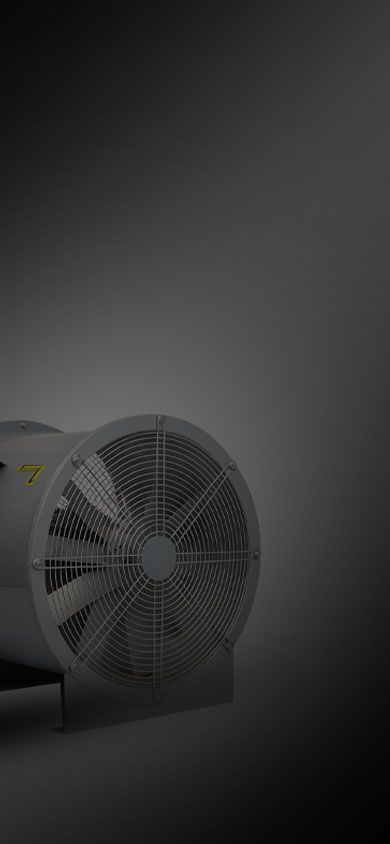
Ventilator
A proper ventilation fan system is essential for any living space, as it helps prevent the formation of an unhealthy indoor environment. While various natural ventilation techniques can be applied, an inadequate fan system can negatively affect well-being and pose serious health risks to occupants.
Today, the use of ventilation fans has become a necessity in residential, commercial, and industrial settings. Proper airflow not only improves quality of life and work efficiency but also prevents issues such as dust accumulation, excessive humidity, and unpleasant odors. Choosing and purchasing the right fan is a critical decision that directly impacts system performance and even the health of individuals. If you're looking to make a smart and confident purchase, this article will serve as a complete and practical guide.
Types of Fans and Their Applications
Fans are among the most essential ventilation equipment, classified based on design, capacity, and functionality. Understanding these types helps you choose the model that offers the best efficiency for your environment.
Axial Fan
The axial or propeller fan is one of the most common types, moving air in a straight line along its axis. Due to its simple design and reasonable efficiency, it's widely used in industrial halls, workshops, and even residential buildings.
Centrifugal Fan
In a centrifugal fan, airflow is directed perpendicular to the impeller shaft, generating higher pressure. This makes it ideal for systems with long duct runs.
Silent Fan
For environments like bedrooms, libraries, or offices, noise levels matter greatly. In such cases, a silent fan is the best choice, thanks to its specially designed motor and blades that produce minimal sound.
Ceiling Fan
Ceiling fans not only provide ventilation but also improve air circulation. They are commonly used in homes, restaurants, and commercial spaces due to their easy installation and popularity.
Industrial Fan
Large spaces such as production workshops, livestock facilities, or factories require high-power fans. These are typically heavy-duty axial or centrifugal models and come at a higher cost than residential units.
Exhaust Fan
Exhaust fans are responsible for removing polluted air, smoke, or unpleasant odors. They are widely used in industrial kitchens, parking garages, and dusty environments.
Key Features and Selection Criteria
Choosing a fan goes beyond appearance or price. To ensure the product meets your needs, consider the following technical criteria:
Capacity and Power
The airflow capacity is one of the most critical factors in fan sizing. An undersized fan fails to provide adequate ventilation, while an oversized one wastes energy. Proper sizing based on space volume and required air changes ensures an accurate and cost-effective choice.
Noise Level
Noise is a major concern, especially in quiet environments. Choosing aerodynamically designed fans with high-quality bearings can significantly reduce noise output.
Build Quality and Material
Durable housing and blade materials are vital for longevity. Metal fans are better suited for industrial use, while plastic models are lighter and more affordable for residential applications.
Energy Consumption
Since fans often run continuously, energy-efficient motors help reduce electricity costs. High-efficiency motors also generate less heat and last longer.
Installation and Maintenance
Some models, like ceiling fans, are easier to install, while industrial or centrifugal fans require technical expertise. Easy access to components for cleaning or servicing is a key advantage for long-term maintenance.
The Importance of Fans in Homes
Fans are key to maintaining healthy indoor air. A high-performance system renews air and prevents condensation caused by human activities such as breathing and cooking. Mounted on walls or ceilings, these units ensure air renewal in bathrooms, toilets, or kitchens. They can be switched on/off via a light switch or a dedicated control, with the latter especially recommended for kitchens.
Fans also help manage humidity, which can have harmful health effects. Indoor air pollution is often 10 times higher than outdoor air due to preservatives, paints, furniture, and carpets that release harmful particles. Odorless toxic gases like carbon monoxide or radon may also be present. A properly ventilated home or workplace provides a healthy breathing environment, and positive ventilation cleans indoor spaces by removing contaminated air.
Fans provide clean air (typically from outside) and expel polluted air, either naturally or mechanically. They come in various types—residential, industrial, or semi-industrial—and are used in a wide range of applications. While many think of fans as household devices, they are also used in much larger and more specialized contexts, with designs tailored to specific needs and environments. Factors affecting the selection of a specialized fan will be discussed later.
Fans for Underground Mines
Underground mining fans offer complete control over airflow in mining environments. Equipped with air quality sensors and programmable features, they optimize airflow below ground. These systems operate independently and require minimal infrastructure.
Benefits of Using Fans
Fans are cost-effective, energy-efficient, and provide significant cooling effects. They help keep indoor air clean and fresh, and various models address challenges in industrial, residential, and parking ventilation. They are known for low noise, durable performance, and refined design.
A high-quality fan is a long-term investment in health, comfort, and energy efficiency. Paying attention to sizing, noise levels, and build quality helps avoid future issues and ensures reliable system performance.
Long Lifespan and Lower Repair Costs
High-quality fans use robust motors, durable bearings, and balanced blades, minimizing wear and extending service life. Proper sizing prevents excessive strain and reduces the need for repairs.
Optimal Performance and Effective Ventilation
Accurate sizing ensures that airflow matches the environment's needs, maintaining consistent air quality and preventing moisture, odor, or pollutant buildup.
Less Noise, More Comfort
Engineering design in quality fans significantly reduces noise. Balanced motors and aerodynamic blades minimize vibration and sound—especially important in residential and office settings.
Mackesh & Dahesh consistently emphasizes quality and customer satisfaction. Our after-sales services meet consumer needs, and our commitment to integrity has established our products across the country.
Fans in HVAC Systems
The main purpose of HVAC is to treat air to create comfortable and healthy conditions for living, working, or industrial processes. This treatment includes cooling, heating, humidifying, dehumidifying, and air filtration. HVAC ensures that indoor conditions reach and remain at desired comfort levels.
As mentioned, air distribution is the most critical part of HVAC, and fans are the heart of air distribution. They are responsible for moving air and overcoming system resistances (pressure drops), either bringing air into or exhausting it from the system.
Based on system needs, fans are divided into two main categories:
Exhaust Fans – for removing air (typically extracting indoor air)
Supply Fans – for blowing air (typically fresh or conditioned air)
Both types can use various fan designs (axial, centrifugal, etc.), but selection should always be based on the application and performance curve under actual operating conditions.
Fan Buying Guide
When planning to buy a fan, remember that the choice goes beyond looks or price. A sound selection should be based on space requirements, ventilation capacity, application type, and installation conditions.
Determine Needs and Location – First, identify where the fan will be installed. Is it for residential or industrial use? Large spaces require high-capacity models like axial or centrifugal fans.
Check Capacity and Calculate Accurately – Capacity must match the space volume. Wrong sizing leads to wasted energy or poor ventilation. We'll cover this in detail in the capacity calculation section.
Consider Noise Levels – If peace matters to you, check the fan's noise output. Low-noise models are available for residential use.
Compare Prices – Price depends on motor type, material, and brand. Compare not only costs but also quality and lifespan. Checking industrial fan prices gives you a more accurate market view.
Why You Need a Fan
Proper ventilation is key to a healthy and safe environment. Without a fan, fresh air circulation is inadequate, leading to various problems.
Improved Air Quality – Fans supply fresh air and remove pollutants, preventing dust, odors, or harmful gases from threatening health.
Humidity Control and Mold Prevention – Excess moisture in kitchens, bathrooms, or workshops can cause rot or mold growth. Fans regulate humidity and prevent these issues.
Enhanced Safety in Industrial Environments – Smoke, gases, and chemical particles are common in industrial settings. Standard ventilation—using industrial fans or exhaust systems—minimizes these hazards.
Common Fan Buying Mistakes and How to Avoid Them
Buying a fan without proper knowledge can waste money and reduce system efficiency. Many focus only on appearance or price, ignoring critical technical factors like sizing and noise. Below are common mistakes and prevention tips:
Buying Without Sizing – One of the most common errors is not calculating the required capacity based on space volume. Undersized fans can't provide adequate airflow. To avoid this, learn how to size a fan based on area, ceiling height, and application.
Ignoring Noise Levels – Many buyers focus only on power and speed, while high noise levels can be disruptive in homes, offices, or bedrooms. Choose low-noise or balanced motor designs to keep noise within acceptable limits.
Focusing Too Much on Price – While price matters, the cheapest options often compromise on motor durability or blade quality. A higher-quality product reduces maintenance and energy costs in the long run and offers more stable performance.
Important Installation and Maintenance Tips
After purchase, proper installation and regular maintenance are crucial for performance and longevity. Even the best fans fail if not installed correctly or serviced periodically.
Proper and Standard Installation – Installation must match the type and location. Centrifugal fans, for example, require ducted systems and precise standards, while ceiling fans are easier to install.
Choosing the Right Location – Place the fan where airflow is unobstructed. Avoid overly dusty or humid areas to protect the motor and blades.
Regular Cleaning and Servicing – Dust on blades and grilles reduces efficiency and increases energy use. Periodic cleaning and lubrication of motors and bearings extend lifespan.
Factors Affecting Fan Prices
Many buyers focus only on appearance or brand, but understanding technical factors is essential. Sizing, motor type, and noise levels can significantly impact the final price.
Fan Type – Axial fans are typically cheaper due to simpler design, while centrifugal fans cost more because of higher pressure and power.
Capacity and Motor Power – Higher airflow capacity requires more powerful motors, increasing cost. Accurate sizing based on actual needs prevents overspending.
Material Quality – Metal bodies and high-quality bearings raise prices but offer better durability. In industrial or humid environments, investing in robust materials is wise.
Noise Level – Low-noise models are more expensive due to advanced design. Ensuring standard noise levels maintains comfort and satisfaction.
Ways to Reduce Fan Noise
Noise is a common concern, especially in quiet spaces. Fortunately, several methods can help reduce it:
Choose a Silent Fan – The best and simplest solution is to buy a silent fan with specially designed motor and blades.
Proper Installation – Extra noise often comes from poor installation. Proper leveling and secure connections prevent vibration. Using anti-vibration mounts or professional installation helps.
Regular Maintenance – Dust buildup increases noise. Periodic cleaning and bearing lubrication reduce sound and extend life.
Choose the Right Location – Placing the fan away from main areas or near insulated walls reduces perceived noise.
Use Accessories – Some models allow for soundproofing or silencer attachments to minimize airflow or motor noise.
How to Calculate Fan Capacity
Correctly sizing a fan is crucial. Undersizing results in poor ventilation, while oversizing wastes energy and increases cost without reason.
Basic Capacity Formula
Fan capacity is measured by the volume of air moved per hour (CFM or m³/h). First, calculate the space volume:
Space Volume = Length × Width × Height (m³)
Then, based on the application, determine the required air changes per hour—typically 10 for homes, 15–20 for kitchens, and up to 30 for workshops or industrial facilities.
Conclusion
Choosing and buying a fan is an important decision for creating healthy, safe, and comfortable environments. As discussed, fans play a vital role not only in ventilation but also in humidity control, pollution reduction, and overall quality of life. Focusing solely on price while ignoring factors like capacity, noise, application type, and after-sales support can lead to poor ventilation or high energy costs.
For a confident choice, familiarize yourself with fan types such as axial, centrifugal, ceiling, and silent fans, and select based on accurate capacity calculation, environmental conditions, and budget. Proper installation and regular maintenance ensure long-term performance and reliability. Share your experiences and insights with the experts at Mackesh & Dahesh.
FAQs
What factors most affect fan prices?
Fan type, motor capacity, housing material, brand, and noise levels are the primary factors.
Which fan is best for quiet spaces like bedrooms?
A silent fan is the best choice, designed to produce very low noise.
How can I calculate the fan capacity I need?
Calculate the space volume (length × width × height) and multiply by the required air changes per hour.
Are residential and industrial fans very different?
Yes. Residential fans have lower capacity and noise, while industrial models like centrifugal fans offer much higher power for large-scale ventilation.
related projects